


Free Online Shop Website Builder: How to Start a Store


Key Takeaways
- Genuinely free plans exist: You can launch a fully functional storefront on a $0 base subscription using hosted freemium platforms (such as Storofy, Big Cartel, and Square) or open-source software (like WooCommerce).
- Platform fees vs. processing fees: Even with $0 platform transaction fees, third-party payment gateways (like Stripe or PayPal) charge standard processing fees (typically 2.9% + 30¢) for processing credit cards.
- Subdomain vs. custom domain: Most zero-dollar plans host your shop on a shared platform subdomain (such as yourstore.storofy.com). Connecting a custom domain usually begins on entry-level paid tiers.
- Fast, low-risk validation: By choosing pre-configured templates and streamlined order routing, solo sellers can launch in under an hour without writing code or hiring technical help.
Table of Contents
What Is a Free Online Shop Website Builder?
A free online shop website builder is a software solution that gives small to mid-size businesses and solo sellers the necessary tools to create an online storefront, upload inventory, and accept incoming customer orders without paying a mandatory monthly subscription fee.
When you build a standard content website or blog, free tools are common. However, conventional builders typically block checkout functionality unless you upgrade to a paid business tier. A true ecommerce builder provides a working transactional engine on its $0 plan, allowing you to begin selling immediately.
At its core, a complete free estore package combines three primary components into one workspace:
- A mobile-responsive storefront theme: Clean layout templates that display product photos, descriptions, variants, and pricing seamlessly across phones, tablets, and desktop browsers.
- A free shopping cart and checkout pipeline: An order intake system that lets shoppers aggregate items, calculate itemized sub-totals and delivery costs, and complete their purchases.
- An order management back office: A straightforward merchant dashboard where you can track incoming orders, view shipping addresses, update inventory counts, and communicate with buyers.
How Free Ecommerce Platforms Operate: The 3 Business Models
Software platforms must maintain servers, databases, security updates, and customer support. Understanding how zero-dollar plans generate revenue protects you from unexpected charges as your sales volume climbs. In modern ecommerce, free plans rely on three distinct operational models:
1. Tiered Freemium
The software is completely free up to an explicit catalog cap (such as 5 items) or functionality boundary. The company monetizes when your store expands and you upgrade to a flat monthly plan for custom domains or larger catalogs.
2. Processing Revenue
The builder charges $0 monthly subscription fees, but requires you to route credit card payments through their proprietary merchant processing network, earning revenue on per-transaction interchange margins.
3. Open-Source Ecosystem
The core codebase is open-source and free to install, but you must independently purchase web hosting and domain registration. The ecosystem monetizes through premium plugin marketplaces and hosting partnerships.

Top Free Online Shop Website Builder Options Compared
To help small to mid-size businesses and solo sellers find the right solution, we evaluated the primary platforms offering functional $0 entry points.
| Platform | Monthly Plan Cost | Product Limit | Platform Fee | Included Subdomain / Domain | Payment Options |
|---|---|---|---|---|---|
| Storofy | $0 / month | Up to 5 products | $0 platform transaction fees (payment gateway fees are separate) | Free yourstore.storofy.com | Cash on Delivery (COD) |
| Square Online | $0 / month | Unlimited items | 0% platform fee (2.9% + 30¢ processing fee per order) | Free yourstore.square.site | Square Pay, Credit Cards, Digital Wallets |
| Big Cartel | $0 / month | Up to 5 products | 0% platform fee (Standard processor fees apply via Stripe/PayPal) | Custom domain supported or bigcartel.com | Stripe, PayPal |
| Ecwid by Lightspeed | $0 / month | Up to 5 products | 0% platform fee (Standard processor fees apply) | Free company.site subdomain | Stripe, PayPal, Cash |
| WooCommerce | $0 software (Hosting required) | Unlimited products | 0% platform fee (Standard processor fees apply) | Requires purchasing custom domain | Any gateway via plugins |
Last verified: October 29, 2026
1. Storofy
Storofy is an affordable Shopify alternative for small to mid-size businesses and solo sellers seeking a fast, conversion-optimized storefront without complex configuration. On the $0 Free forever plan, you can upload up to 5 products with $0 platform transaction fees (payment gateway fees are separate). The store operates on a free hosted yourstore.storofy.com subdomain and includes built-in Cash on Delivery support, making it ideal for validating new product ideas with zero financial risk. Connecting a custom domain starts on the Starter plan ($15/mo), while integrated card payments via Stripe are available on the Pro plan ($25/mo).
2. Square Online
Square Online is tailored for brick-and-mortar stores, pop-up shops, and local sellers who already use Square hardware. The free tier allows unlimited products with no monthly software subscription. Square monetizes by charging standard credit card processing fees (typically 2.9% + 30¢ per transaction). While the product limit is generous, the free plan includes Square branding and requires a paid upgrade if you wish to connect your own domain.
3. Big Cartel
Big Cartel has been a staple platform for artists, printmakers, and craftspeople. Its free "Gold" tier permits up to 5 items with 1 image per product. A standout benefit of Big Cartel's free tier is that it allows custom domain mapping without requiring a plan upgrade. However, the 1-image limit can restrict items that require multiple angles or lifestyle photos.
4. Ecwid by Lightspeed
Ecwid functions as an embeddable commerce widget that integrates into existing websites, blogs, or social profiles. The free tier supports up to 5 physical products. It is practical for bloggers who want to add a modest merchandise section to an existing WordPress or Wix site without rebuilding their entire web presence.
5. WooCommerce
WooCommerce is an open-source ecommerce plugin for WordPress. The software itself is free with no item limits. However, it is not a hosted platform: you must purchase web hosting (typically $3 to $10 per month) and a domain name ($10 to $15 per year), while taking responsibility for regular software updates, security backups, and server maintenance.
Step-by-Step: How to Make a Website Online for Free
Launching an ecommerce storefront does not require web development experience. By following this 5-step process, you can launch a store and begin collecting orders today:
Step 1: Create an Account & Claim Your Subdomain
Register on your selected platform. You will establish a store handle that forms your free URL (for example, yourbrand.storofy.com). Select a clean, intuitive name that matches your brand identity.
Step 2: Add Your First Products
When working within a 5-product free tier limit, upload your core flagship items. Take clean photos in natural daylight against a neutral background. Write clear product titles and concise descriptions that outline dimensions, materials, and dispatch times.
Step 3: Set Up Order Fulfillment & Payment Methods
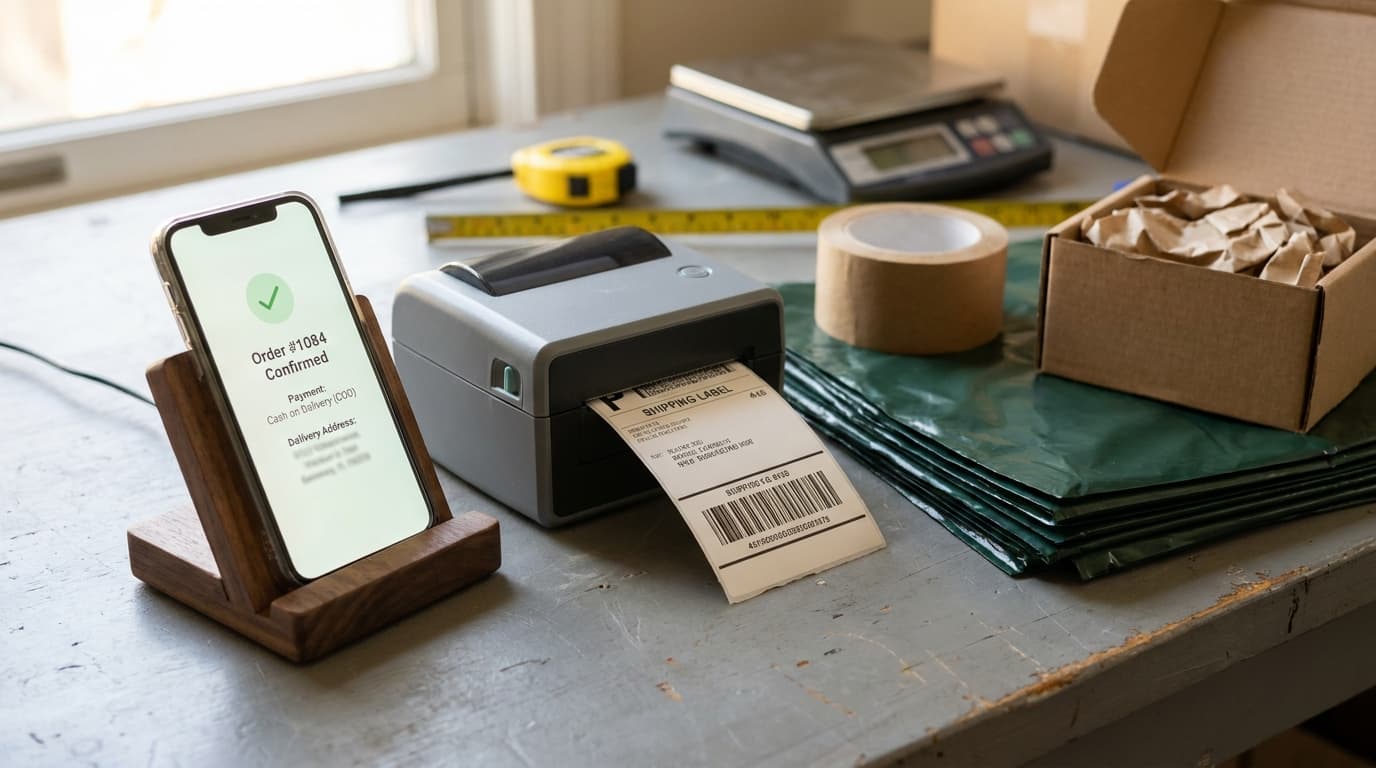
Specify your fulfillment rules. If you are operating on Storofy's Free plan, enable Cash on Delivery (COD) to start taking local orders immediately without waiting for merchant bank underwriting. Define simple flat-rate shipping rates to avoid confusing buyers at checkout.
Step 4: Refine Your Storefront Presentation
Keep your layout clean. Upload your logo with a transparent background, select an easily readable font, and add a brief "About" bio explaining where orders are prepared and shipped from. Fast-loading, uncluttered designs convert better than complex animations.
Step 5: Run a Test Order and Publish
Open a private browsing window, add an item to your cart, and complete an order as if you were a customer. Confirm that customer notifications fire properly and that shipping calculations match your rules. Once confirmed, share your store link across your social media channels.

When to Upgrade from a Free Plan to a Custom Ecommerce Web Site
Starting on a free tier allows you to preserve capital. However, as order volumes grow, upgrading to an entry-level paid plan becomes a sensible financial decision.
Consider transitioning to a paid tier when:
- Your order volume passes 15 orders monthly: The increased buyer trust of a custom domain easily offsets the small monthly subscription cost.
- You need broader payment methods:Adding one-click card checkout via Stripe (available on Storofy's $25/mo Pro plan) reduces cart abandonment for shoppers who prefer cards over cash.
- You need to expand your catalog: Moving to Storofy Starter ($15/mo) unlocks 50 products, while Pro ($25/mo) supports unlimited products.
- Transaction fee percentages exceed flat monthly costs: If you use a platform that takes a 5% cut on its free tier, that cut equals $100 on $2,000 in monthly sales. Upgrading to a plan with $0 platform transaction fees saves you money each month.

Frequently Asked Questions
What is the best completely free ecommerce platform?
The best choice depends on how you plan to fulfill orders. For solo sellers and boutique businesses testing inventory with zero overhead, Storofy offers a $0 Free forever plan with up to 5 products and $0 platform transaction fees (payment gateway fees are separate). For local sellers syncing with retail POS hardware, Square Online offers a functional free catalog. For independent artists wanting custom domain mapping on a 5-item catalog, Big Cartel is a reliable option.
Can I build an online store for free without paying monthly fees?
Yes. Platforms like Storofy, Square Online, Big Cartel, and Ecwid provide genuine forever-free tiers that let you upload inventory, generate a functional storefront link, and process orders without a monthly subscription. You only cover standard payment gateway fees when collecting credit card transactions, or zero processing fees when fulfilling orders through Cash on Delivery.
Is Shopify completely free to use?
No. Shopify does not offer a forever-free plan. While they frequently offer short promotional periods (such as a 3-day free trial followed by $1 for your first month), continuing to sell through Shopify requires an ongoing subscription starting at $39 per month on their Basic tier, plus payment processing fees and potential third-party transaction fees if not using Shopify Payments.
Can I connect a custom domain on a free ecommerce website plan?
On most hosted platforms, connecting a custom domain requires an upgrade to a paid subscription. For example, Storofy provides a free yourstore.storofy.com subdomain on its Free tier, while custom domain connections start on the $15/month Starter plan. Among hosted builders, Big Cartel is one of the few exceptions that permits custom domain mapping on its 5-product free tier.
What are payment gateway fees compared to platform transaction fees?
Platform transaction fees are surcharges taken by the ecommerce software company on top of your plan cost. Storofy charges $0 platform transaction fees on all plans. Payment gateway fees, by contrast, are charged directly by financial intermediaries (like Stripe, PayPal, or card networks) to securely process card payments. These processing fees exist on all ecommerce software platforms.
Launch Your Free Store Today
Starting an online business does not require risking capital on costly software packages before you validate customer demand. By choosing a transparent, free online shop website builder, small to mid-size businesses and solo sellers can test products, manage orders efficiently, and build a lasting business.
Start free at storofy.com. The Free plan includes up to 5 products with $0 platform transaction fees (payment gateway fees are separate). When you need to scale, explore our Starter and Pro plans for custom domain support and card checkouts. For a deeper breakdown of ecommerce software options, read our guide on the top alternatives to Shopify in 2026.
Stop paying extra platform penalties on every sale.
Launch your online store with Storofy today. Enjoy built-in modern templates, no developer needed, zero platform transaction fees ($0 platform transaction fees. Payment gateway fees, e.g. Stripe, are separate), and a 30-day trial with no credit card required.